TB-500 (Thymosin Beta-4) and wound healing
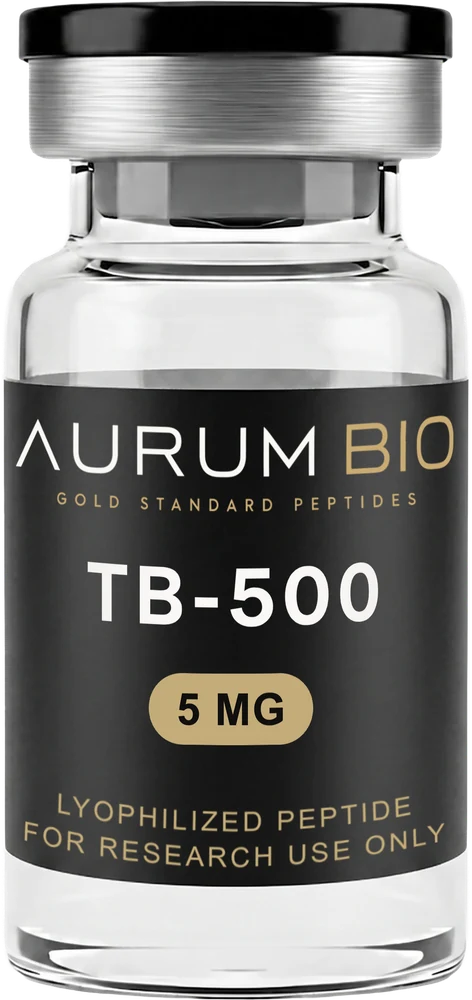
If BPC-157 is the most talked-about peptide in tissue repair research, TB-500 is its most debated counterpart. Also called Thymosin Beta-4, it appears in almost every discussion of wound healing and anti-inflammatory research.
What is TB-500 / Thymosin Beta-4?
Thymosin Beta-4 is a naturally occurring 43-amino-acid peptide found in almost all human cells. It's one of the most abundant peptides in the body, particularly concentrated in tissues involved in movement, repair, and protection.
The name comes from the thymus gland, where it was first isolated; "Beta-4" refers to the specific form identified in early research. TB-500 is the synthetic, research-grade form of Thymosin Beta-4 — the numbering comes from a research-chemical supplier naming convention and doesn't refer to a different compound.
One important note: Thymosin Alpha-1 (Tα1) is a different peptide with different mechanisms and a more established medical profile. Don't confuse the two.
How is TB-500 thought to work?
TB-500 has broader proposed mechanisms than most peptides.
- Actin regulation — the most well-documented mechanism. Thymosin Beta-4 binds G-actin and prevents it from assembling into F-actin filaments. By controlling actin polymerization, it helps regulate cell movement and migration, proliferation, and tissue regeneration. In wound healing, cells must migrate to the injury site, and TB-4's actin-regulating activity appears to facilitate this.
- Anti-inflammatory effects — multiple animal studies show reduced pro-inflammatory cytokines, creating a better repair environment.
- Angiogenesis — studies suggest TB-4 may promote the formation of new blood vessels, critical to wound healing, particularly in corneal wound models (among the most cited in the literature).
- Stem cell differentiation — some research suggests TB-4 may influence how stem cells differentiate.
- Matrix metalloproteinase (MMP) regulation — MMPs remodel the extracellular matrix; TB-4 appears to regulate MMP activity, potentially preventing excessive tissue breakdown.
What the research shows
Corneal wound healing. This is the most well-established area. Multiple animal studies in rats and mice show that TB-4 eye drops accelerate corneal wound closure. Human clinical trials were conducted in the early 2000s: RegeneRx Biopharmaceuticals ran Phase II trials of TB-4 for neurotrophic keratitis, a rare corneal disease. Results were mixed — some benefit, but the trials did not meet all primary endpoints. It remains one of the only areas with human data.
Skin wound healing. Animal studies in mice and rats show that topical and injectable TB-4 accelerate skin wound closure — faster re-epithelialization, reduced inflammation, and improved tensile strength. Human skin studies are limited.
Tendon and ligament repair. Preliminary animal studies suggest support for tendon healing in Achilles models, but the evidence base is smaller than for BPC-157 and the results are less dramatic. TB-4 may work more on inflammation control and remodeling than on direct repair.
Muscle repair. Limited but growing evidence in mice (cardiotoxin and crush models) shows improved fiber regeneration and faster functional recovery versus controls.
Neurological applications. This is the most speculative area. Some early animal studies suggest neuroprotective effects, and RegeneRx explored neurological applications, but none advanced to human trials as of this writing. The gap between rodent stroke data and human neurological conditions is enormous.
TB-500 vs. BPC-157: how do they compare?
There are no head-to-head human studies, so any comparison rests on mechanism and animal data.
| TB-500 / Thymosin Beta-4 | BPC-157 | |
|---|---|---|
| Primary focus | Anti-inflammatory, tissue remodeling | Direct tissue repair, GI protection |
| Strengths | Broad anti-inflammatory, angiogenesis | Tendon/ligament repair, GI healing |
| Mechanism | Actin regulation, MMP modulation, cytokine reduction | GH receptor upregulation, nitric oxide pathway |
| Human data | Limited (corneal trials) | Very limited |
| Research maturity | Earlier stage | More animal data available |
The "stack" hypothesis — combining TB-500 and BPC-157 — is based on seemingly complementary mechanisms. It's a reasonable hypothesis, but it is not validated by controlled human research.
What we don't know
- Human dosing — no established equivalent.
- Long-term safety — most studies are short-term.
- Optimal administration route — injectable versus topical.
- Interactions — not well-characterized.
- Quality variability — third-party CoAs are essential.
Sourcing notes
- CAS number — 77591-33-4 (Thymosin Beta-4); vendor catalog numbers vary.
- Appearance — typically a white, lyophilized powder.
- Storage — refrigerated or frozen; protect from light.
- Reconstitution — bacteriostatic water or sterile saline.
- Purity — third-party CoA; 95%+ minimum, 98%+ preferred.
The bottom line
TB-500 / Thymosin Beta-4 is a well-characterized peptide in animal research, with a plausible mechanism centered on actin regulation, anti-inflammatory activity, and tissue remodeling. The corneal wound-healing data is the most robust — one of the few peptide applications with actual human clinical trial data, even if the results were mixed.
For skin, tendon, and muscle, the animal data is encouraging but not conclusive; the compound appears to work more on the wound environment than on direct reconstruction. The honest summary: a legitimate research peptide with a reasonable mechanism and a meaningful, if limited, evidence base. Until more research exists, strong claims about human outcomes aren't justified.
References
Citations are listed by title so they can be verified directly on PubMed. Identifiers are omitted deliberately rather than reproduced from memory.
FOR RESEARCH USE ONLY · NOT INTENDED FOR HUMAN CONSUMPTION. This article describes compounds and the research literature in which they appear. Nothing here is a recommendation, protocol, or statement of effect.