
GLP-1 peptides: semaglutide, Ozempic & the research
GLP-1 receptor agonists are the most written-about peptide class in the world right now. Here is what they are, how they work, what the research shows, and where the open questions remain.
What is GLP-1?
GLP-1 stands for Glucagon-Like Peptide-1, a hormone that occurs naturally in the gut and is released in response to food — particularly carbohydrates and fats. It's an incretin hormone, signaling from gut to pancreas. Its primary functions:
- Stimulating insulin release when blood glucose is elevated (glucose-dependent)
- Suppressing glucagon
- Slowing gastric emptying
- Promoting satiety
This is the body's natural appetite regulation. The problem: natural GLP-1 has a very short half-life — roughly 1–2 minutes — because it's broken down rapidly by the enzyme DPP-4 (dipeptidyl peptidase-4). That's why the body uses it in short, meal-triggered pulses.
What are GLP-1 receptor agonists?
Synthetic peptides that mimic natural GLP-1 but carry modifications resisting DPP-4 breakdown, so they last much longer and provide sustained receptor activation. The key difference from natural GLP-1 is duration of action. Sustained activation produces the therapeutic effect — and the side effects.
Key GLP-1 receptor agonists
Semaglutide (Ozempic / Wegovy)
The most widely known. Marketed as Ozempic (type 2 diabetes, with weight loss as a side effect) and Wegovy (chronic weight management — the same drug at higher doses). It's a modified version of human GLP-1 with amino-acid substitutions that increase half-life, given by subcutaneous injection, typically once weekly. It has been studied extensively in large RCTs — unusual in the peptide world.
Liraglutide (Saxenda / Victoza)
Marketed as Victoza (T2D) and Saxenda (weight management). It requires daily injections, unlike semaglutide's weekly dosing, and was studied in large RCTs including the SCALE trials for weight management.
Tirzepatide (Mounjaro / Zepbound)
Not a pure GLP-1 agonist — a dual GIP/GLP-1 receptor agonist, activating both the GLP-1 and GIP receptors. This dual action is of significant research interest. Marketed as Mounjaro (T2D) and Zepbound (weight management).
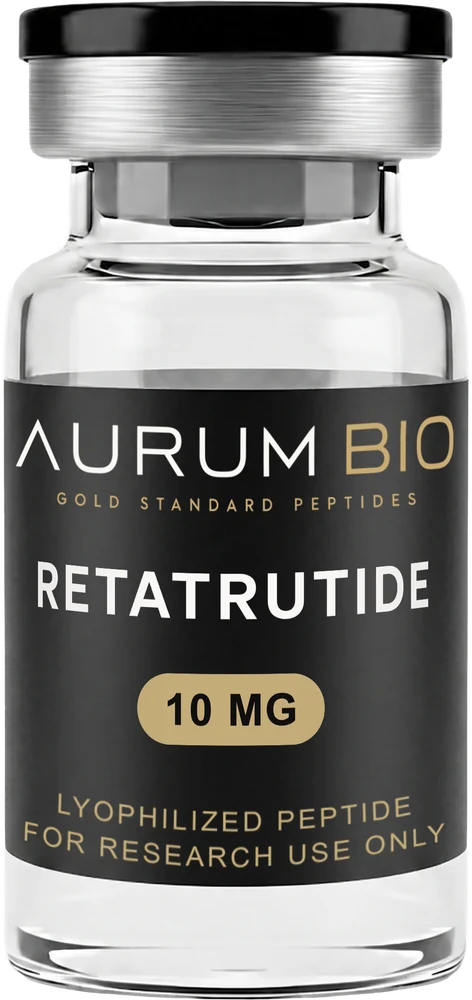
Retatrutide
An investigational triple agonist that activates GLP-1, GIP, and glucagon receptors. It's in Phase 3 clinical trials as of this writing. Early data suggests it may produce more significant weight loss than existing GLP-1 drugs, but the data is still preliminary.
What the research shows
Weight loss
The evidence for semaglutide and weight loss is robust.
Semaglutide (STEP trials): STEP 1 showed average weight loss of about 15% of body weight (−14.9%) over 68 weeks, versus −2.4% for placebo; STEP 2 found semaglutide superior to sitagliptin; STEP 3 combined it with intensive behavioral therapy for even greater loss; STEP 4 demonstrated sustained loss over 68 weeks.
Tirzepatide (SURMOUNT trials): SURMOUNT-1 reported about 20.9% of body weight lost in the primary analysis, and up to ~22.5% among adherent participants, over 72 weeks — approaching the efficacy of bariatric surgery.
Important context: these are FDA-approved medications used under medical supervision in controlled trials.
Glycemic control and type 2 diabetes
GLP-1 agonists were developed for T2D first. Glucose-lowering is well-established and glucose-dependent, carrying a lower hypoglycemia risk than some drugs. The SUSTAIN and SURPASS programs demonstrated significant HbA1c reductions for semaglutide and tirzepatide respectively.
Cardiovascular outcomes
One of the most meaningful findings: the SUSTAIN-6 trial demonstrated that semaglutide reduced major adverse cardiovascular events — heart attack, stroke, cardiovascular death — by 26% in high-risk patients with T2D. Most weight-loss drugs have neutral or negative cardiovascular profiles; GLP-1 drugs have demonstrated actual cardiovascular risk reduction.
How GLP-1 produces weight loss
- Appetite suppression — acts on hypothalamic appetite centers; the primary mechanism.
- Slowed gastric emptying — prolongs fullness.
- Reduced "food noise" — a reported reduction in obsessive food thoughts.
- Improved insulin sensitivity.
- Potential effects on reward pathways — more speculative.
What we don't know
Long-term safety: most trials run 1–2 years; 5–10 year data is lacking. Concerns include pancreatitis, thyroid C-cell tumor risk (seen in rodents at high doses — unclear human relevance), gallbladder disease, and mental-health effects (some reports, causality unclear).
Muscle loss: significant weight loss includes lean mass, which is particularly relevant for older adults.
Sustainability after withdrawal: in STEP 1, participants who continued semaglutide maintained their loss; in the extension, those who came off semaglutide regained approximately two-thirds of the weight they had lost within one year. GLP-1 therapy may need to be long-term.
Effects in non-obese individuals: not well-characterized.
Side effects
Gastrointestinal effects — nausea, vomiting, diarrhea, constipation — are most common and worse during dose escalation. Others include fatigue, injection-site reactions, dumping syndrome (rare), and hypoglycemia (low risk alone, real in combination therapy).
Research peptides vs. FDA-approved drugs
FDA-approved GLP-1 drugs — Ozempic, Wegovy, Mounjaro, Zepbound, Saxenda — are prescription medications: regulated, studied in large trials, and available via pharmacies. "Research-grade" GLP-1 peptides from compounding pharmacies or research suppliers occupy a different category, where quality, purity, and dosing are not regulated the same way. The clinical data supporting semaglutide and tirzepatide was generated using the actual pharmaceutical products, not compounded peptides.
The bottom line
GLP-1 receptor agonists are the most well-validated peptide-based pharmacological intervention for weight management we have. The trial evidence for semaglutide and tirzepatide is extensive, consistent, and clinically meaningful — roughly 15% (semaglutide) to ~21% (tirzepatide) body weight loss in large RCTs. The cardiovascular data is a particular strength. Open questions remain around long-term safety, muscle loss, sustainability after discontinuation, and effects in non-obese populations. For anyone considering GLP-1 therapy, this should happen under medical supervision.
References
Citations are listed by title so they can be verified directly on PubMed. Identifiers are omitted deliberately rather than reproduced from memory.
FOR RESEARCH USE ONLY · NOT INTENDED FOR HUMAN CONSUMPTION. This article describes compounds and the research literature in which they appear. Nothing here is a recommendation, protocol, or statement of effect.